“This is not a cinema that needs to put its audience in the front row, instead, we sit and wait alongside, part of the nameless mystery of our own passing. “Not Yet” is a miracle of economy and restraint.”

Mike Hoolboom for Panorama-cinéma.

Not yet (trailer)

Director, cinematographer and editor. Sound design by Zita Leemans / 19 min

The ‘son of the forest’ traverses the depths of the Cuban jungle. His sister, an elderly woman with the gift of foresight, awaits his arrival in the middle of a blackout night. Both have returned from the dead to guide the spirits who wander around them.

I see documentary filmmaking as an encounter in which, with proper care, sensitivity and deep respect, there can be an honest confluence between the portrayed and the portrayer. Furthermore, it allows the filmmakers to reflect on themselves, analysing the position from where, how and what is observed, questioning their perspective and acting ethically in response to the infinite diversity of humanity. That is why I believe in films whose structure and production behaves in a plastic manner, adapting to the circumstances and characteristics of the people who inhabit the stories. In this way, I think that a more horizontal hierarchy of priorities is established, in which the clumsy and anxious machinery of cinema manages to function as a genuine listening device, resulting in much deeper films and human relationships.

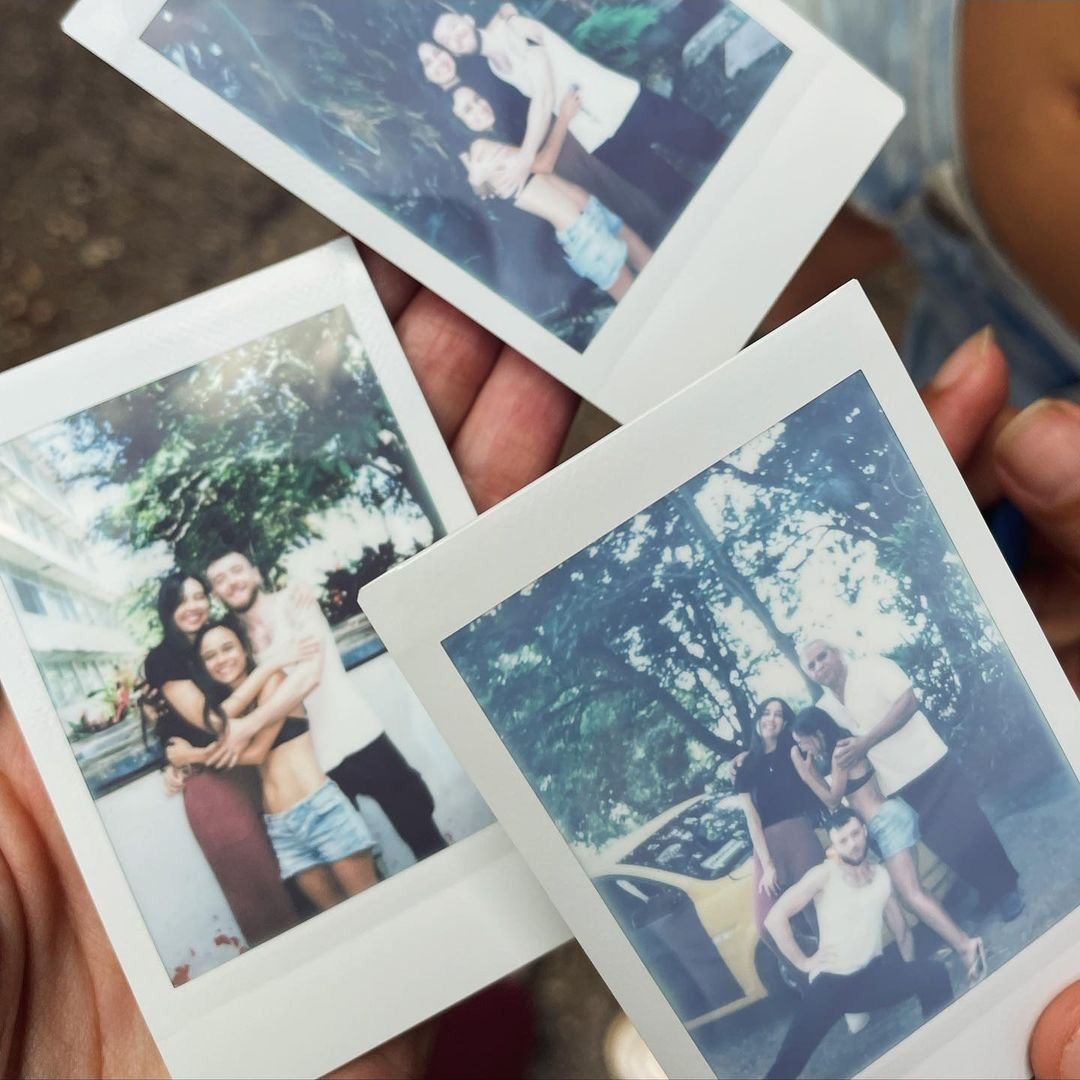
In the case of “Todavía no”, this transformative encounter unfolded gradually as a result of my close relationship with María and Ismael. Over the months, our casual conversations came to revolve around events that had changed our lives: all three of us had been involved in serious accidents in which we felt ourselves dying, and once we recovered nothing was ever the same again. Recalling those shared experiences turned out to be a liberating experience, encouraging me to share it by sketching a serene portrait of those feelings which, particularly in the cultures of the global north, are treated as a complete taboo. This decision presented the sensitive challenge of dealing with personal traumas that are, in addition, shaped by the complex cultural heritage of Santería. For these reasons, the film’s formal decisions were conceived to ensure the respect, ethics, and affection for its protagonists. This meant avoiding the inclusion of specific stories and rituals which, although I had been invited to portrait them, I considered more appropriate to address through the parallels that exist in their environment and their job as charcoal burners.

“Not yet” is my final thesis for the Alternativo Masters in the EICTV of Cuba. Currently in distribution at festivals.

The leap (trailer)

Director, cinematographer and editor. Sound design by Nathalia Quimbay / 15 min

Two children wander into the darkness of the Cuban countryside. An adult paddles them silently to the other side of the lagoon where they live. They have gone out to confront the mystery that the elders talk about in secret: at night the cattle disappears, as do those farmers who dare to confront the “monster” they live with.

I feel an attraction and infinite curiosity for the passage states, limbic moments and vital transitions. I understand that these hinge moments contain us with what we used to be and with what we are about to become, so they have a complexity and a richness that helps us to revisit ourselves over time with all our nuances in constant transformation. Sometimes these vital flows are motivated, accompanied or catalysed by the figure of a medium who accompanies and guides us; a Charon who helps us cross over to the other side to discover a new inner territory.

With these concerns in mind, I heard the story of Jíbaro, a remote village that had to be reached by crossing the dam in a boat. There I met Ashley, the boatman who takes care of the passage of the villagers to both banks. Eventually I also met the rest of his family, where I appreciated one of those limbic states: that of his grandson Fabián, an eleven year old boy who is leaving behind his childhood and innocence as he is influenced by the rough social and political circumstances around him.

The film was shot during a week for the documentary chair at EICTV with the collaboration of the family and neighbours of the protagonists Fabián and Christian. The direct sound was recorded by filmmaker Mónica Torregrosa. The film is currently in distribution at festivals.

Now he is in the truth (trailer)

Director, cinematographer and editor. Sound design by Saulo Adrián / 11 min

What awaits us when we cross a limbo?
Who inhabits it?
What memories do we encounter inside it?

‘Now he is in the truth and we stay in the lie’ is the sentence that triggered this film. The friend who said it was referring to a relative of his who had just been buried. Those words, pronounced calmly and naturally, mobilised an erratic search around the contrast between the lightness and unpredictability of the ‘lies’ of everyday life and the absolute presence of the ‘truth’ around us.

The film was shot in digital, pushing the sensitivity of the sensor to unhealthy limits. All effects and textures are worked in-camera.

Black grass

Director, cinematographer, editor and sound designer  / 7 min

Self-sabotaged self-portrait.
Undefined definition.
A presentation?
A prelude?
Definitely a question.
Hopefully a greeting.

Black Grass is an essay in which drift, intuition and some recurring images encapsulate sensations of a very specific moment in my life. In this short film I chose to flee from my usual way of working more structured and with clear searches to prioritise impulsivity and the present moment as a guide to reach a more subconscious and visceral result.

To reinforce that sense of presence and intimacy I used a very basic handycam that I carried with me everywhere. Editing and sound were worked on by imposing track limitations and deadlines on myself in order to continue deriving the cohesion of the film in abrupt and intuitive decision-making.

ABOUT

My name is Roberto Tarazona, I was born by the mediterranean in Spain in 1992 and raised surrounded by almond and olive trees.

I feel that I have always had a pronounced perception of the passing of time and that these sensations translated into attempts to preserve what moved me through painting and photography.

Those first steps and many pictures later encouraged me to study cinematography at the European Film College in Denmark. Years working in the industry went by, and my interest in broadening my horizons in cinema brought me to the EICTV of Cuba to study the masters of alternative cinema and later to join the regular course of documentary.

Currently I’m developing a new short film alongside an expanded cinema installation while working as a director of photography for other filmmakers and artists.

Over the years I have directed and photographed projects as diverse as documentaries with minimal equipment to industrial commercials. I feel that this seemingly contradictory experience helps me to adapt different techniques and strategies when facing the challenges of a shoot. I see these predominant practices complemented by my work as an editor and sound designer on several of my short films. More and more frequently I realise that in my decisions or proposals a more holistic vision of cinema is present in which pre, post and production reflect the infinite ways of articulating its elements.

I believe in a close, warm and meticulous way of working in which the care during the research and development process nurtures the final result. I see creating as both a responsibility and a game, something that with enough honesty allows us to come closer to understanding who we are and to portray a fraction of the beauty of our differences.

If you have any questions about my work or simply want to get to know me a bit better I'll be happy to talk to you so don't hesitate to contact me.

Take care and a big hug!

Roberto

CONTACT

Doubts, questions, proposals? Hit me up!